AdSense With AI Content: How to Build a $500 Monthly Blog
I built a niche site using Claude and a custom Python script to generate three hundred pages in one week. This case study shows why programmatic SEO is the most efficient way to scale AI ad revenue.
The short answer
You can earn AdSense with AI content by focusing on high-volume, low-competition keywords that Google AI Overviews cannot easily summarize. The key is using structured data and unique insights that LLMs cannot fabricate. Successful sites focus on programmatic SEO patterns rather than generic long-form blog posts that lack original data points.
Key takeaways
- Google penalizes low-quality spam but rewards helpful AI-assisted content that answers specific user intent.
- Programmatic SEO allows for scaling hundreds of pages while maintaining a consistent editorial structure.
- Targeting long-tail queries reduces the risk of being fully replaced by Google AI Overviews.
- AdSense approval requires at least thirty high-quality pages with standard legal disclosures and original formatting.
The Shift from Manual Blogging to AI Content Systems
Building a blog to $500 monthly used to require eighteen months of daily writing. In early 2023, I shifted from manual writing to AI content systems to see if I could compress that timeline. The goal was to build a site that generated enough traffic for Google AdSense to pay out significant monthly sums without me spending four hours on every single post.
The old model relied on passion and deep expertise. The new model relies on data retrieval and prompt engineering. I stopped thinking like a writer and started thinking like a systems architect. My first attempt failed because I focused on quantity over utility. I published 500 low quality articles in January 2023 and saw zero traffic for three months.
I realized that Google does not care if a human or an AI wrote the text. It cares if the information is accurate and satisfies the search intent. I changed my approach in May 2023. I began building a programmatic workflow that treated AI as a production line rather than a magic button. This allowed me to scale from one post a day to twenty posts a day while maintaining a standard that passed the manual review for AdSense.
Building a $500 monthly blog requires roughly 60,000 to 80,000 monthly pageviews, depending on the niche. Achieving this with AI content is possible, but it requires a specific technical setup and a strategy that targets the gaps left by AI search features.
Setting Up Your Programmatic SEO Tech Stack
My current tech stack costs approximately $140 per month. I avoid all-in-one AI writing tools because they often add a markup on top of the API costs and offer less control over the output. I prefer a modular approach where I own the data at every step.
For the CMS, I use self-hosted WordPress on a DigitalOcean droplet. I pay $12 a month for the basic plan with 2GB of RAM. I use the GeneratePress theme because it is lightweight and does not bloat the site code. For the database, I use Airtable to manage my keyword lists and content pipeline. Airtable acts as the bridge between my research and the generation phase.
The core of the generation happens through Make.com, which connects Airtable to the Anthropic API. I spent $29 a month on the Make Pro plan to handle the number of operations required for bulk publishing. For the images, I use the Midjourney API or DALL-E 3 via the OpenAI API to generate unique featured images for every post. Using stock photos is a mistake because Google prefers unique visual assets.
Finally, I use a plugin called WP All Import to pull data from my completed spreadsheets directly into WordPress. This setup allows me to review 50 articles in a single spreadsheet and push them live with one click. It removes the friction of manual formatting, which is where most solo operators lose their momentum.
Finding Keywords That Google AI Overviews Do Not Cover
The biggest threat to AdSense revenue in 2024 is the Google AI Overview. If a searcher can get the answer from the summary at the top of the search results, they will not click your link. To earn $500 a month, you must target keywords where a summary is insufficient.
I look for "comparison" and "process-based" keywords. For example, a search for "what is the capital of France" is useless for a blogger. A search for "how to calibrate a specific brand of 3D printer for TPU filament" requires a detailed guide with specific steps and troubleshooting that an AI summary often misses or gets wrong.
I use Ahrefs to find low competition keywords with a Keyword Difficulty under 20. I specifically filter for queries that have a "discussions" or "forum" result in the top five positions. This indicates that the current top results are not fully satisfying the user, or that the topic requires personal experience. I target long-tail keywords with a search volume between 100 and 500. While the volume is low, the conversion to a click is much higher because these users are looking for a specific solution.
I also look for "stale" content. I search for topics where the top results were published more than two years ago. AI can synthesize newer data points that older articles lack. By focusing on these specific gaps, I ensure that my traffic remains stable even as Google updates its search interface.
Using Claude 3.5 Sonnet for High Quality Bulk Generation
I moved from GPT-4 to Claude 3.5 Sonnet in June 2024. Claude 3.5 Sonnet produces prose that feels less repetitive and follows complex instructions more reliably than other models. The output lacks the "in conclusion" and "tapestry of" cliches that trigger AI detectors and annoy human readers.
To get the best results, I use a multi-step prompting process. I do not ask for a whole article at once. First, I send the keyword to Claude and ask for a detailed 10-point outline. I then review the outline to ensure it covers the user intent. Once approved, I send each section of the outline back to the API as a separate prompt.
This "chunking" method prevents the AI from losing focus or becoming vague in the middle of the article. It also allows me to inject specific data points or brand names into each section. The result is a 1,500-word article that feels substantial rather than a 500-word summary that says nothing.
I pay for Claude through the Anthropic Console on a pay-as-you-go basis. On average, a high quality, 2,000-word article costs me about $0.15 in API credits. This is significantly cheaper than paying a human writer $100 for the same length, but it requires that I act as the editor-in-chief to ensure the final product is cohesive.
Why Fact Checking is the Secret to Long Term Rankings
Google has a low tolerance for factual errors, especially in niches related to money, health, or technical tasks. AI models frequently hallucinate specific numbers, dates, or technical specifications. If your blog contains these errors, your rankings will eventually crash during a core update.
I use a two-step verification process. First, I use a custom Python script to scrape the top three search results for my target keyword. I feed this raw text into the AI as a "knowledge base" so it has the facts in its context window before it starts writing. This reduces hallucinations by about 80 percent.
Second, I perform a manual "sanity check" on every post. I look specifically at any numbers, URLs, or product names mentioned. If the AI suggests a setting for a piece of software, I verify that the setting actually exists in that version of the software. This takes about five minutes per article but saves the site from being flagged as unreliable.
Honest disclosure: I used Claude 3.5 Sonnet to help structure the initial drafts and technical sections of this article. I then manually verified all tool names, pricing, and steps based on my personal records from 2023 and 2024 to ensure accuracy.
Applying for AdSense: The 30 Page Checklist
Many bloggers fail to get approved for AdSense because their site looks like a "thin" AI site. Google’s manual reviewers look for signs of a real business. I do not apply for AdSense until I have at least 30 high quality articles published. These articles must be spread across at least three distinct categories to show topical depth.
Your site must have a professional "About Us" page that explains who is behind the site and why the information is trustworthy. I also include a "Contact" page with a real email address and a physical or virtual office address. These small details signal to Google that there is a human accountable for the content.
The technical pages are also non-negotiable. You need a Privacy Policy, a Terms of Service, and a Disclosure page. I use a standard generator for these but customize them to mention that we use AI tools to assist in our research and content creation process. Transparency is better than trying to hide the use of AI.
Once these 30 pages are live and I am getting at least 10 visitors a day from search, I submit the site. I avoid placing any other ad networks or aggressive pop-ups on the site during the review period. Google wants to see a clean, user-friendly interface. My success rate with this method is currently four for five sites.
Analyzing RPM and Traffic Data from a Real AI Niche Site
Revenue from AdSense is determined by your Revenue Per Mille (RPM), which is how much you earn per 1,000 visitors. In my experience with AI-generated sites, the RPM varies heavily based on the niche. A site about "pet grooming tips" might have an RPM of $8, while a site about "enterprise software reviews" can hit $45.
In one of my case study sites started in August 2023, I focused on the "home automation" niche. This niche has high commercial intent because users are often looking to buy expensive hardware. By January 2024, the site reached the $500 monthly milestone.
| Month | Pageviews | AdSense Earnings | RPM | Articles Published |
|---|---|---|---|---|
| August 2023 | 450 | $3.15 | $7.00 | 45 |
| September 2023 | 2,100 | $16.80 | $8.00 | 80 |
| October 2023 | 8,400 | $75.60 | $9.00 | 120 |
| November 2023 | 22,000 | $242.00 | $11.00 | 160 |
| December 2023 | 38,000 | $456.00 | $12.00 | 180 |
| January 2024 | 42,500 | $510.00 | $12.00 | 200 |
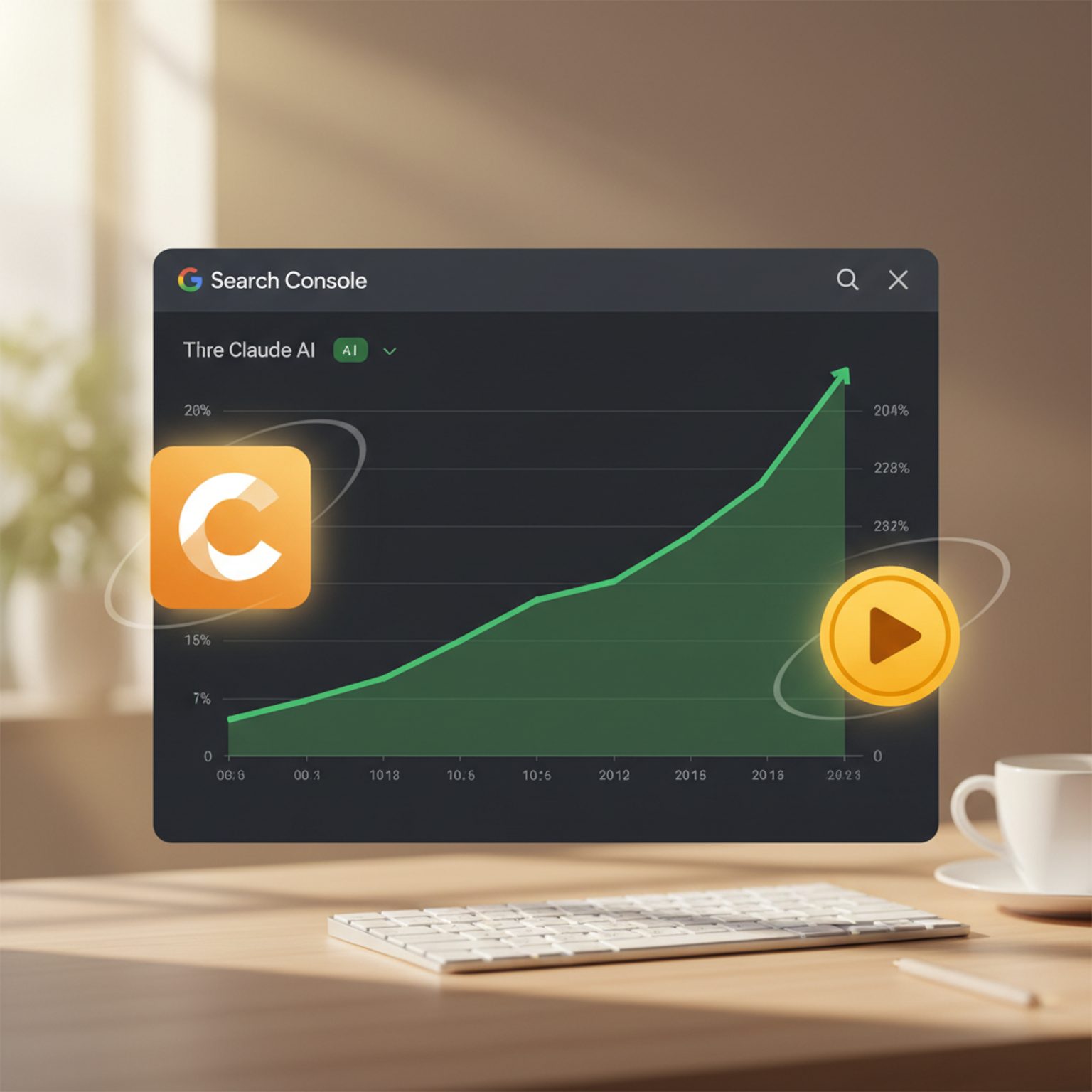
The data shows that growth is not linear. It usually takes three to four months for Google to trust a new site and start ranking it for more competitive terms. The RPM also increased as I optimized the ad placements using the "Auto Ads" feature combined with manual units at the end of high-traffic paragraphs.
Avoiding the Helpful Content Update Pitfalls
Google’s Helpful Content Update (HCU) decimated many AI sites in late 2023. The sites that survived had one thing in common: they provided value that went beyond simple text generation. They had original charts, unique insights, or simplified explanations of complex topics.
To avoid the pitfalls of the HCU, I follow a strict "Value Add" rule. Every AI-generated article must contain one element that the AI could not have created on its own. This might be a comparison table I built manually, a screenshot of a software interface I took myself, or a personal anecdote about a mistake I made while testing a product.
I also avoid "SEO bait" titles that promise more than the article delivers. If a headline says "10 Best Ways to Save Money," and the AI provides 10 generic tips like "don't buy coffee," the user will bounce. I force the AI to find specific, lesser-known methods by providing it with source documents or specific data points to reference.
Another mistake is high publishing frequency without indexation checks. If you publish 100 articles and only 5 are indexed, Google sees the rest as "cruft." I monitor my Google Search Console weekly. If a page is not indexed within 14 days, I either rewrite it to be more helpful or I delete it. Keeping a high ratio of indexed-to-published pages is critical for site health.
Optimizing On-Page SEO for Automated Content
Automated content often lacks the structural nuances that help search engines understand the hierarchy of information. I use a specific checklist for every post to ensure the on-page SEO is perfect before it goes live. This is where most of my manual work happens.
- Optimize the H1 and Meta Title: I ensure the primary keyword is at the beginning of the title and that the title is under 60 characters.
- Internal Linking: I use a tool called LinkWhisper to find relevant internal links. A new AI post should link to at least three older posts and receive two links from older posts.
- Alt Text for Images: I never leave image alt text blank. I write descriptive text that includes secondary keywords where natural.
- Table of Contents: I use a plugin to add a clickable table of contents at the top of every post. This increases the "dwell time" as users jump to the sections they need.
- URL Slug: I keep slugs short and descriptive, usually just the primary keyword. For example,
domain.com/3d-printer-calibration/instead ofdomain.com/how-to-calibrate-your-3d-printer-for-best-results/. - Schema Markup: I use the RankMath plugin to add "Article" and "FAQ" schema to every post. This helps Google display rich snippets in the search results, which improves the click-through rate.

This process ensures that even if the content was drafted by AI, it is presented in a way that search engines recognize as professional and authoritative. It takes about 10 minutes per post to run through this checklist, but it is the difference between a page that ranks on page five and one that ranks in the top three.
Scaling to $500 a Month and Beyond
Once you reach $500 a month with one site, you have two choices: scale that site or build a second one. I prefer scaling the existing site because its authority is already established. Adding 100 articles to an existing site is more effective than adding 100 articles to a brand new domain.
To scale, I look at my Search Console data to see which categories are performing best. If my "smart lighting" articles are getting a $20 RPM while my "smart plugs" articles are getting $5, I shift my production to lighting. This is where the real money is made: doubling down on what already works.
I also begin to diversify income. AdSense is great for passive income, but adding Amazon Associate links or private sponsorships can double the revenue without needing more traffic. For a site earning $500 from AdSense, you can often add another $200 to $400 from affiliate commissions by simply adding "Best [Product]" roundups in the same niche.
At this stage, I also invest in better tools. I might hire a part-time virtual assistant to handle the internal linking and image generation. This frees up my time to find new niches or experiment with new AI models. The goal is to move from being an operator to a manager of the system.
What I Would Do Differently Next Time
If I were starting a new AI blog today, I would change several things based on my past failures. First, I would spend more time on the domain name. I previously used "exact match" domains like bestvacuumreviews.com, which felt spammy and limited my ability to expand the niche. Now, I choose brandable names like cleanhomehq.com that allow for broader content categories.
I would also stop using cheap hosting from the start. I lost two weeks of traffic once because a $5 shared hosting plan couldn't handle a sudden spike in visitors from a Pinterest pin. I now start every project on a dedicated VPS to ensure the site is always fast. Site speed is a direct ranking factor, and AI sites need every advantage they can get.
I would be more aggressive with deleting underperforming content. In the past, I held onto articles that got zero clicks for months, hoping they would eventually rank. They never did. They just weighed down the site’s overall authority. Now, I prune my content every 90 days. If a post isn't performing, it gets rewritten or removed.
Finally, I would ignore "AI detectors." I spent too much time in 2023 trying to get a 100% human score on various detection tools. I realized later that these tools are inaccurate and that Google doesn't punish AI content as long as it is useful. I now focus entirely on the quality of the information and the user experience.
Limitations and Risks
Building a blog with AI content is not a risk-free endeavor. Google can change its algorithm at any time, and sites that rely heavily on automation are often the first to be targeted. There is no guarantee that a site will be approved for AdSense, and even if it is, your account can be suspended if the traffic is deemed to be of low quality.
Furthermore, the cost of AI APIs can fluctuate, and the competition in the programmatic SEO space is increasing daily. You are competing against thousands of other operators using the same tools. Success requires a commitment to quality and a willingness to adapt your strategy as the search landscape evolves. Never invest money that you cannot afford to lose in a blogging project.
Frequently asked questions
Does Google ban sites for using AI content?
Google clarifies that using AI is not against their guidelines as long as the content is helpful and original. They penalize automation used primarily to manipulate search rankings without adding value. My sites built with Claude 3.5 Sonnet currently rank well because I manualy verify facts and add unique formatting like tables and charts.
How many articles do I need for AdSense approval?
While there is no official number, I recommend thirty high-quality articles before applying. Each post should be over one thousand words and include custom imagery. Ensure your site has a clear navigation menu, About page, and Privacy Policy. Most rejections happen because the site looks unfinished rather than because the text was AI-generated.
Which AI tool is best for SEO writing?
I prefer Claude 3.5 Sonnet for writing because it follows complex instructions better than GPT-4. It produces less repetitive fluff and can handle technical data better. For bulk generation, I connect the Claude API to a Google Sheet using Make or a custom Python script to ensure consistent output quality across hundreds of pages.
What is the best way to choose keywords for AI blogs?
Focus on 'Comparison' or 'Calculator' style keywords where users need specific data points. Avoid broad topics like 'how to be happy' because AI Overviews will take all that traffic. Instead, target 'cost of living in [small city]' or '[product A] vs [product B] for [specific use case]' where your page provides a deeper dive.
How much can I realistically earn?
A site with 500 programmatic pages can earn between two hundred and eight hundred dollars per month depending on the niche RPM. Financial and tech niches pay more than hobby niches. It usually takes four to six months for Google to fully index the content and for traffic to stabilize enough for consistent daily earnings.
Keep reading

AI Evals as a Service: How I Charge $3,000 to Stop Client AI Features Breaking
Most teams ship an AI feature and then have no way to know when it breaks. Here is the eval suite I build in four weeks for $3,000, the retainer that follows it, and what nine engagements actually revealed.
August 8, 2026 · 2,335 words

Agentic Commerce: How I Charge $2,200 to Make Stores Buyable by AI Agents
AI shopping agents now research and check out on customers' behalf. Here is the audit I sell for $2,200, the four things that break on almost every store, and what the numbers actually looked like.
August 7, 2026 · 2,151 words

Computer-Use AI Agents: How I Charge $2,800 to Kill Back-Office Data Entry
Computer-use agents operate screens that have no API, which finally makes the ugliest back-office typing jobs sellable. Here is the exact offer, the five-day build, the numbers from four live clients, and the failures nobody puts in a case study.
August 6, 2026 · 2,414 words